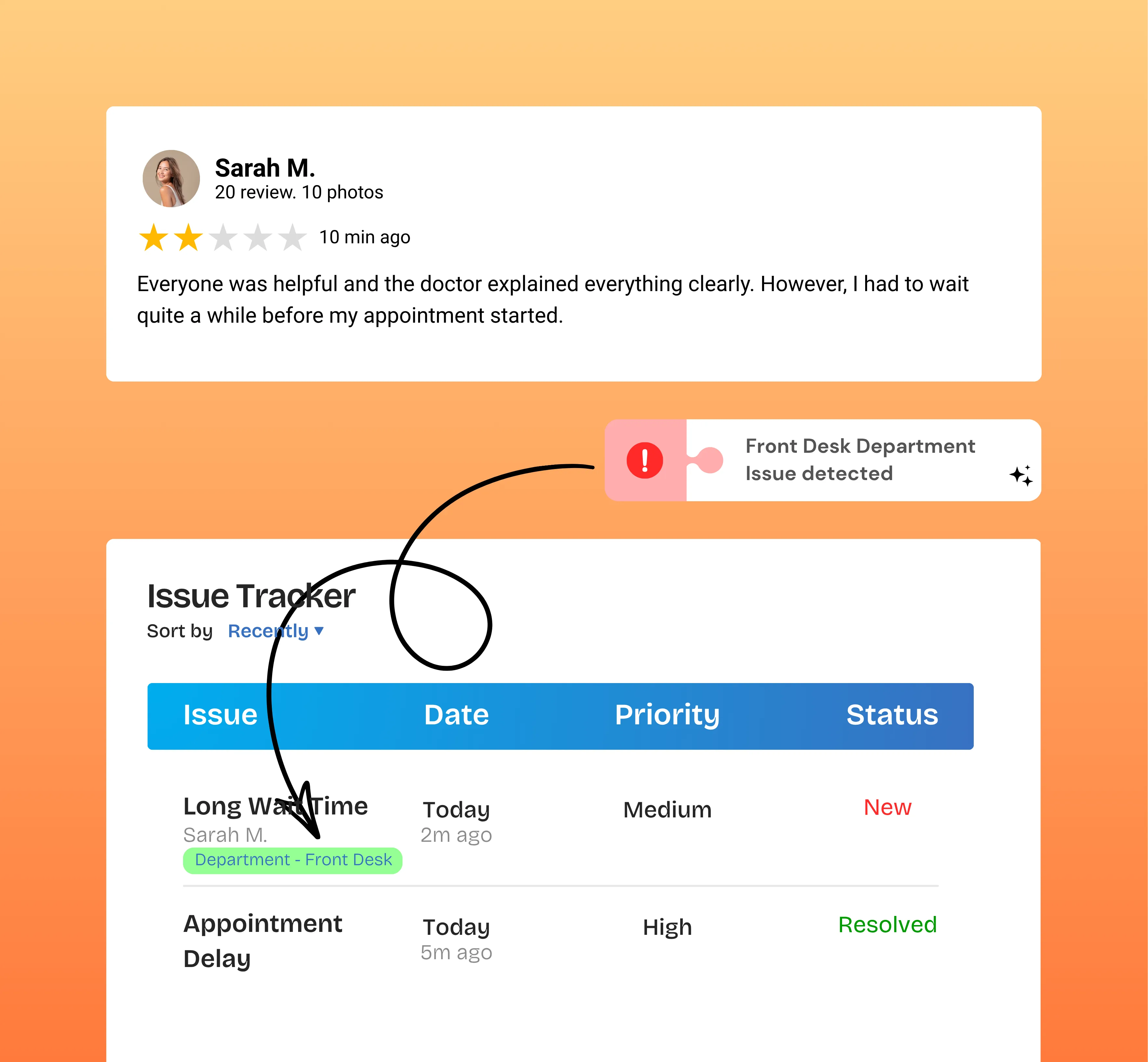
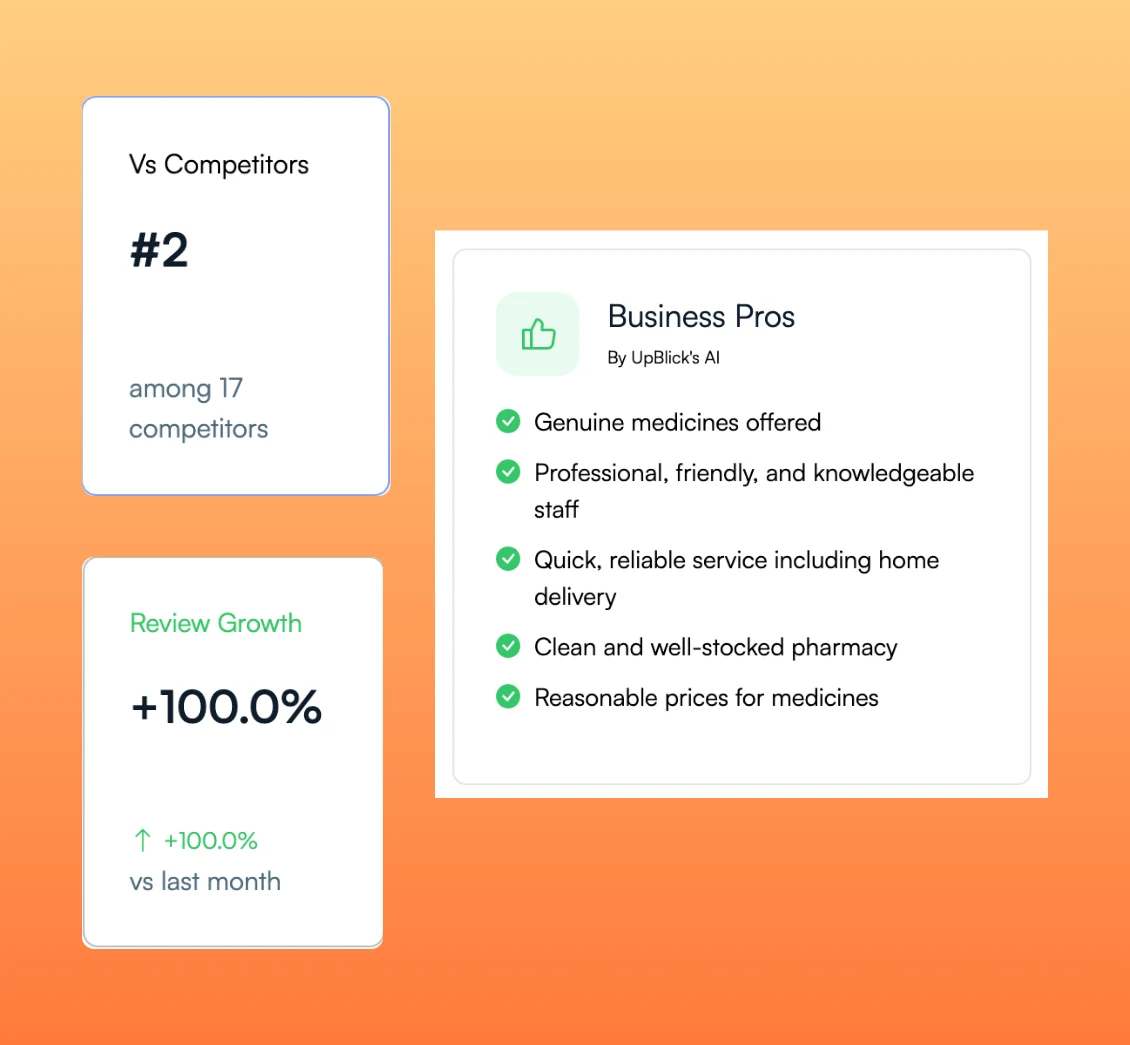
Identify customer concerns, organize follow-up, track issue resolution, and use genuine feedback to improve customer experiences and strengthen long-term trust.
No Credit Card Required • Setup in Minutes • Built for Local Businesses
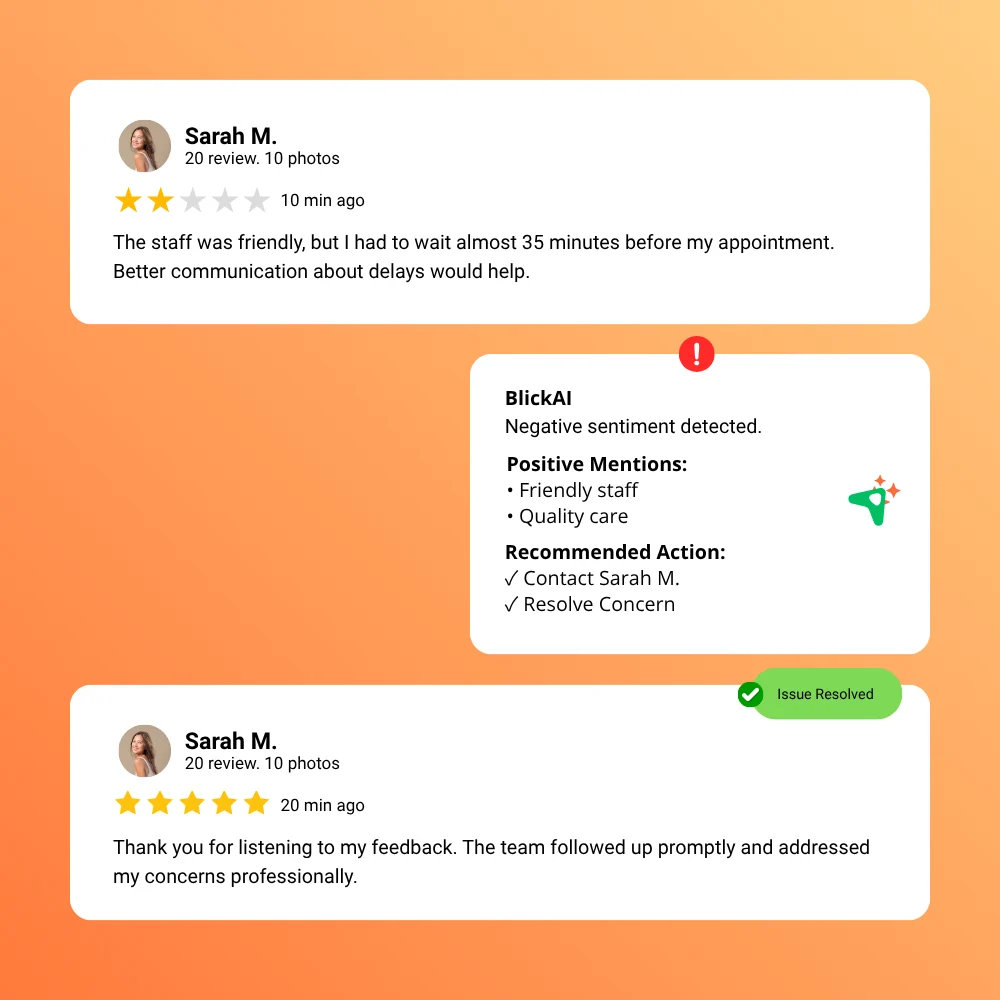
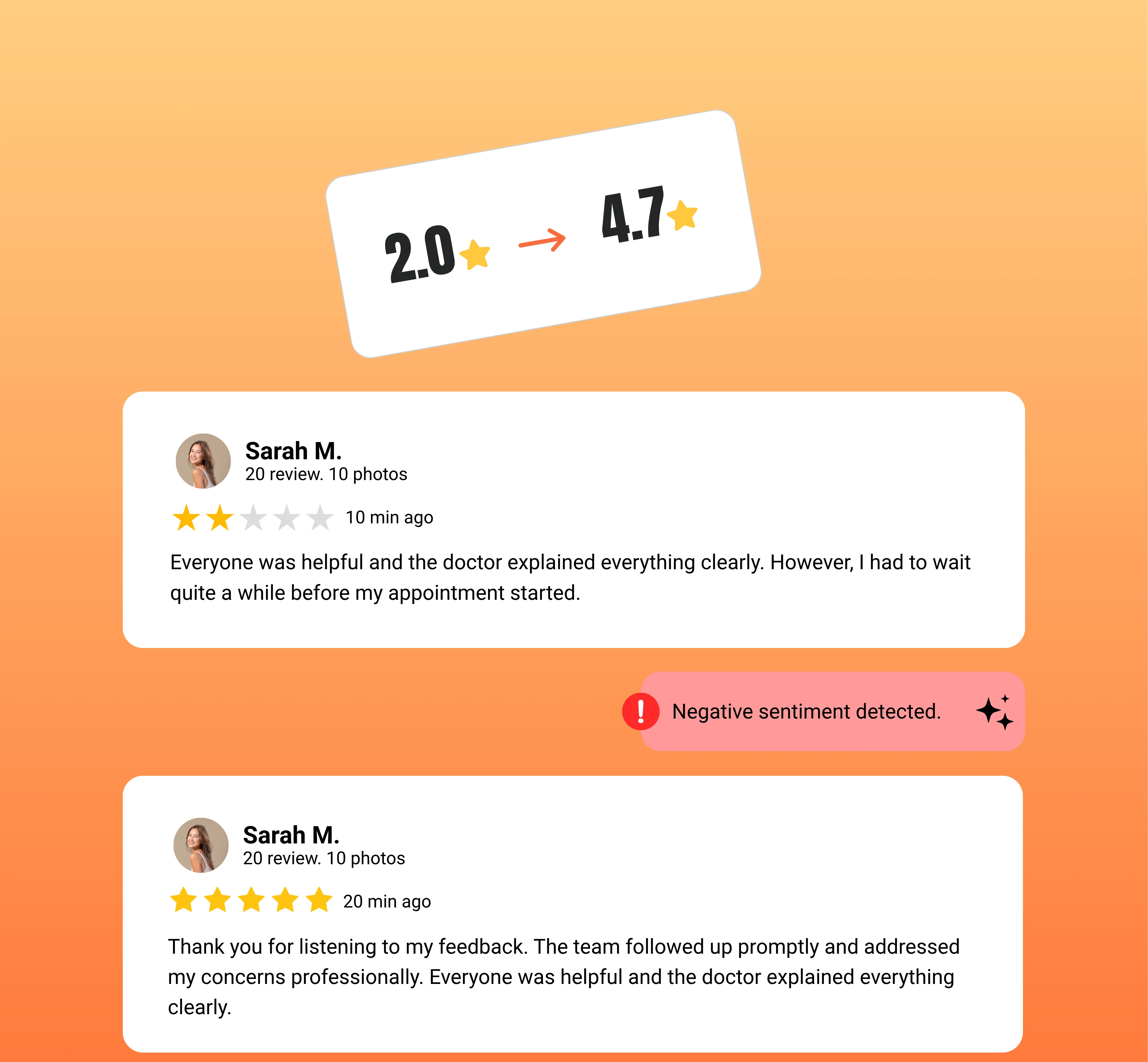
Reputation recovery is not about hiding negative feedback. It is the process of understanding customer concerns, helping teams follow up, recording what happened, and learning how future experiences can improve.
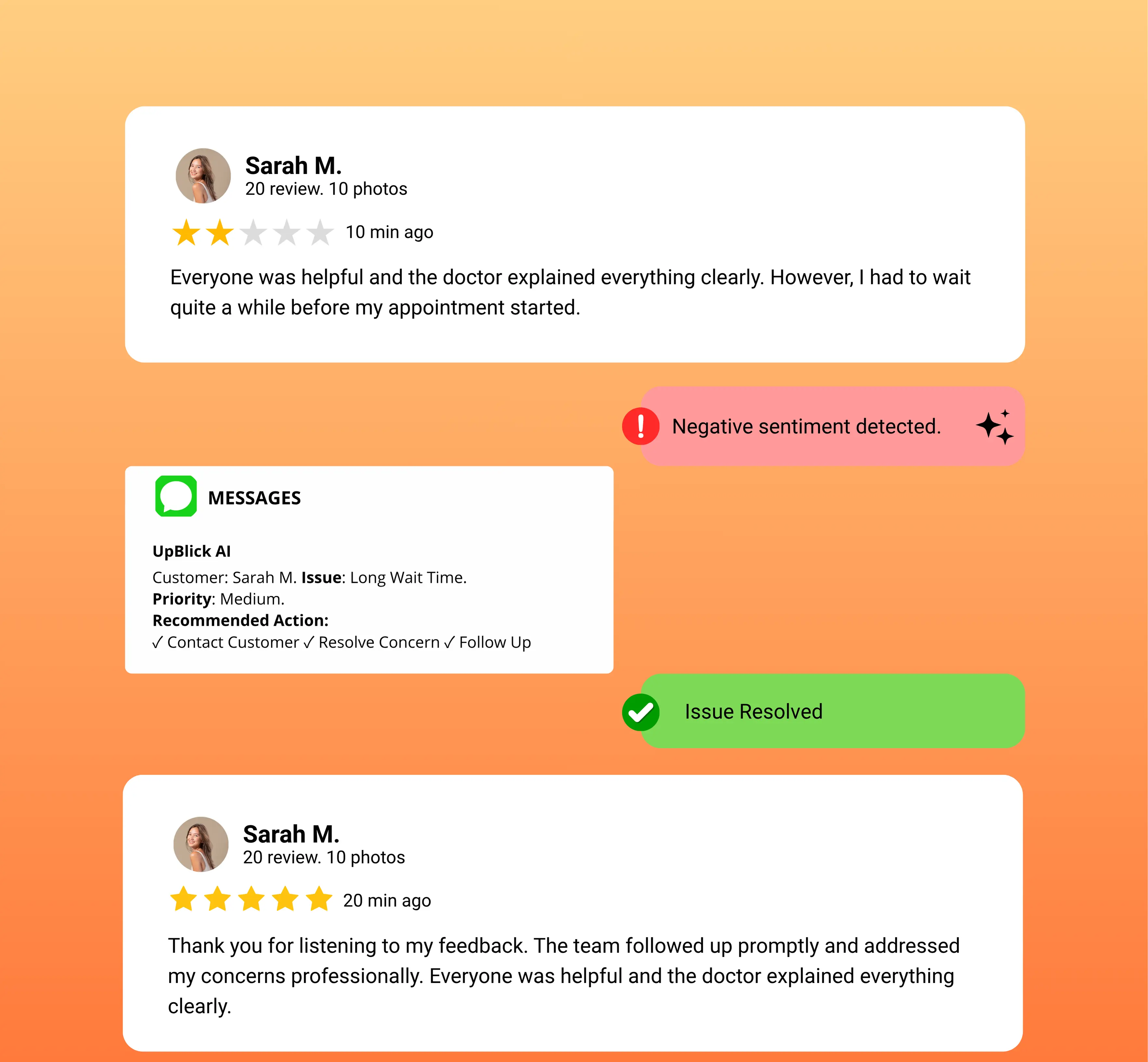
Bring low-rated reviews and private customer feedback into a location-specific issue queue so the team can see which concerns require action.
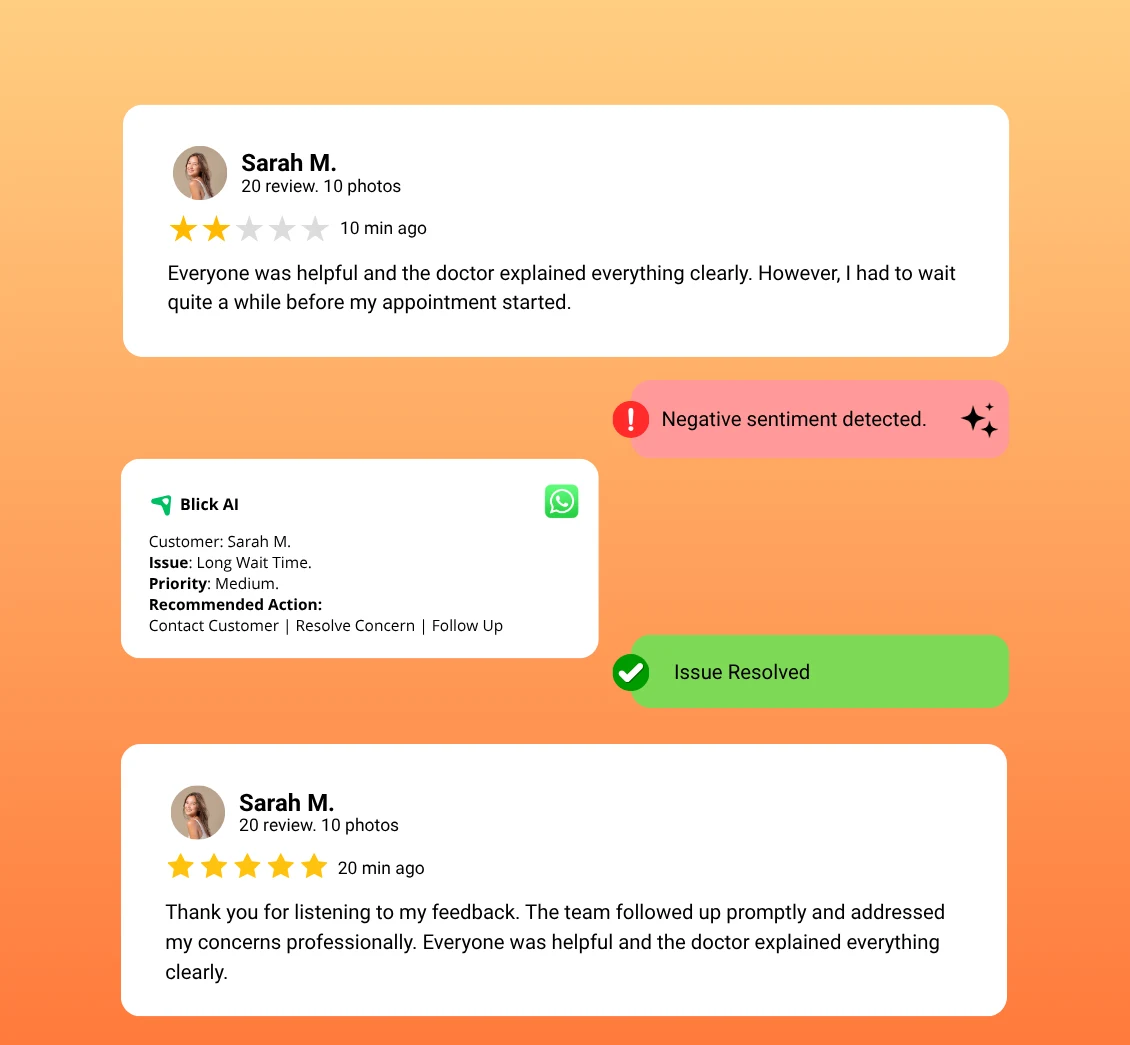
Use the feedback, rating, AI-generated category, sentiment, summary, and priority as context for a thoughtful business response.
Track contact attempts, status changes, notes, and resolution details so customer concerns become part of an accountable improvement process.
Reputation recovery is not about hiding negative feedback. It is the process of understanding customer concerns, helping teams follow up, recording what happened, and learning how future experiences can improve.
Bring low-rated reviews and private customer feedback into a location-specific issue queue so the team can see which concerns require action.
Use the feedback, rating, AI-generated category, sentiment, summary, and priority as context for a thoughtful business response.
Track contact attempts, status changes, notes, and resolution details so customer concerns become part of an accountable improvement process.
UpBlick combines customer feedback management software with location-based issue tracking so teams can move from a concern to a documented outcome.
Create an issue when supported customer feedback or a review indicates that the experience requires attention.
Give the team a clear place to begin customer issue resolution.
Use AI-generated reason, category, sentiment, summary, and priority fields to help the team understand the customer concern before following up.
AI adds context; the business decides the appropriate action.
Track whether an issue is open, in progress, resolved, not resolved, unreachable, or unresolvable and record contact attempts along the way.
Clear status information helps teams avoid losing track of customer concerns.
Save resolution details, status notes, contact attempts, the team member responsible, and a dated history of issue updates.
A documented outcome helps teams learn from the customer experience.
Use location-specific issue queues, status totals, search, and filters to keep each branch focused on its own customer feedback.
Different locations can require different follow-up and improvement priorities.
Use a structured reputation recovery process to understand feedback, take appropriate action, and learn from the result.
Review the customer feedback, rating, issue category, sentiment, summary, and priority.
Key Actions
Contact the customer where appropriate, record attempts, update the issue status, and document the action taken.
Key Actions
Review issue history and customer feedback patterns to identify where future experiences and operations can improve.
Key Actions
Collect more feedback, understand your customers, respond faster, and build a stronger online reputation—all from one platform.
UpBlick helps local businesses identify concerns, understand issue context, coordinate follow-up, document outcomes, and improve reputation management practices.
Create trackable issues from supported low-rated reviews and private customer feedback.
Turn feedback that needs attention into an actionable record.
Add reason, category, sentiment, summary, and priority context to help teams review concerns efficiently.
Use AI context as assistance, not as a replacement for judgment.
Move issues through supported statuses and record each customer contact attempt.
Keep ownership and progress visible to the team.
Maintain dated status changes, notes, resolution details, and the team member who handled the update.
A clear history makes customer recovery work easier to review.
Search customer details, feedback, AI reasons, and categories or filter the queue by issue status.
Help teams focus attention where it is needed.
Keep customer issues, statuses, and resolution activity connected to the correct business location.
Each location keeps a clear record of its customer experience issues.
01
Identify customer concerns
02
Understand the issue context
03
Follow up and document action
04
Learn and improve experiences
The difference is not whether a business receives negative feedback. It is whether the team can understand the concern, follow up responsibly, and learn from the outcome.
Feedback can be noticed without creating clear ownership, follow-up records, or a documented final outcome.
Common Challenges
UpBlick creates a structured issue record with customer context, AI assistance, status tracking, contact attempts, notes, and resolution history.
A More Accountable Workflow
Reputation management software supports long-term trust when it helps businesses listen, respond appropriately, document action, and improve the customer experience.
A structured issue record helps the team understand what happened and which concerns still require attention.
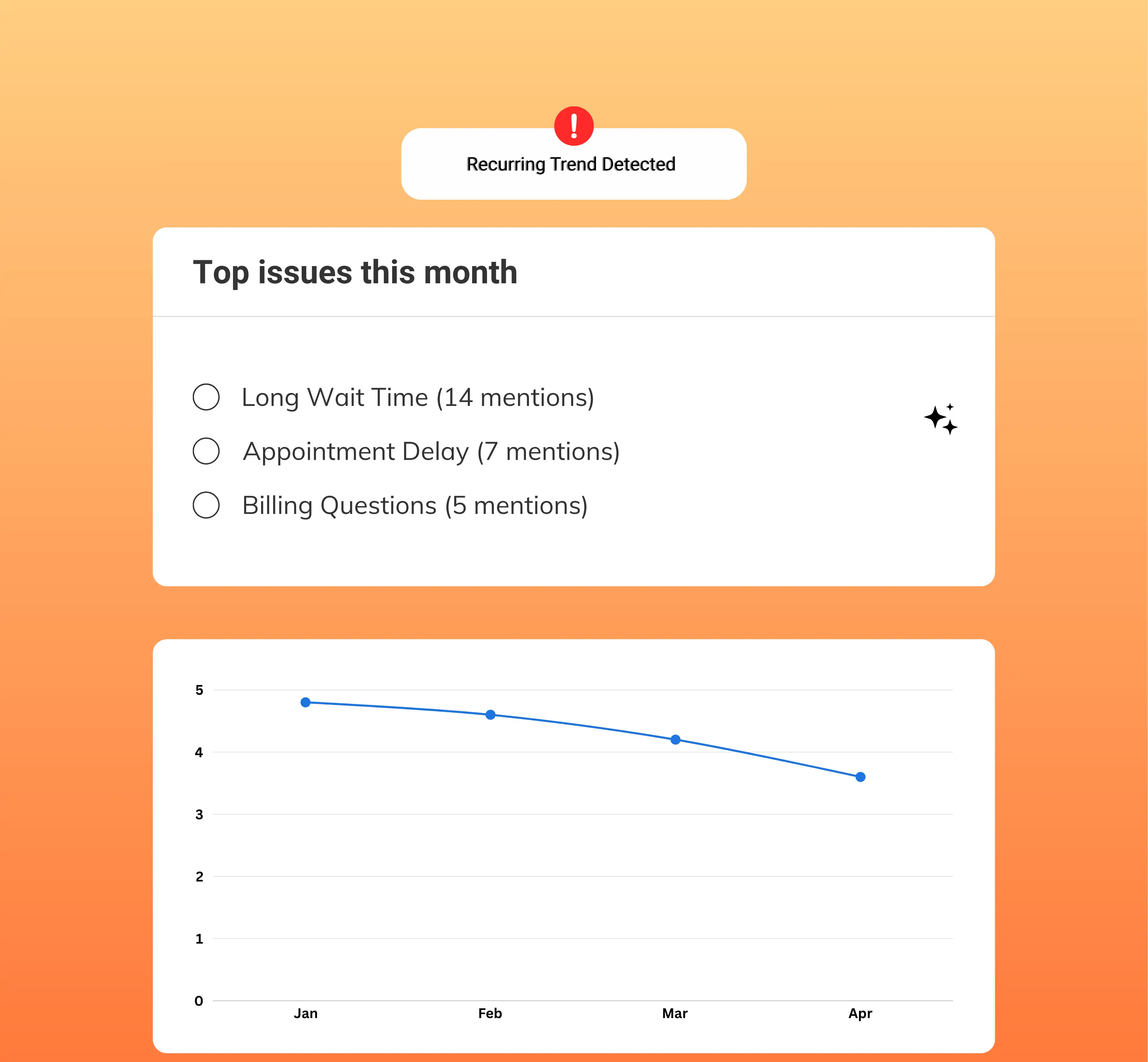
Issue categories, sentiment, summaries, notes, and outcomes provide useful context for identifying repeated service or experience problems.
Thoughtful follow-up and documented action demonstrate that customer feedback is taken seriously, even when an issue cannot be fully resolved.
Learn how UpBlick helps local businesses identify customer concerns, organize follow-up, document issue resolution, and improve future customer experiences.
Generate more reviews, strengthen your reputation, and attract more local customers with UpBlick.