UpBlick vs Famepilot: Which Reputation Management Platform Is Better for Indian Businesses?

Pankaj Kumar
Published on 20 Aug, 2026Summary
If you are comparing UpBlick vs Famepilot, the real question is not “which tool has more features?” The better question is: which platform will help your team ask for Google Reviews at the right time, catch unhappy customers before they complain publicly, reply faster, understand recurring issues, and manage reputation without adding another complicated system to daily work?
- Choose UpBlick if your business wants a complete local reputation workflow: customer interaction, WhatsApp/SMS/email review requests, private feedback, reputation recovery, Google review growth, AI-assisted responses, analytics, competitor tracking, customer records, and multi-location visibility.
- Consider Famepilot if your priority is broader review monitoring across many review sources, campaigns, ticketing, sentiment analysis, listings, multi-location dashboards, or agency/white-label use cases described on Famepilot’s own product pages.
- The main difference: Famepilot is positioned as a review, feedback, listing, and reputation-management platform. UpBlick is built around the day-to-day review-growth and customer-recovery workflow of Indian local businesses.
- Best buying rule: do not buy the category name. Buy the workflow your receptionist, store manager, clinic coordinator, branch head, or owner will actually use every week.
- For UpBlick’s workflow, compare WhatsApp automation, review generation, customer feedback, AI review responses, analytics insights, customer mapping, and multi-location management.
UpBlick vs Famepilot: Which One Actually Fits an Indian Business?
A salon owner does not usually wake up thinking, “I need a reputation-management platform.” She thinks, “Why did we get only eight Google Reviews this month?” A clinic owner asks, “Why are patients complaining about waiting time?” A restaurant manager asks, “Why are customers not responding to our WhatsApp messages?” A franchise owner asks, “Which branch is getting worse reviews, and who is replying?”
That is the practical lens this comparison uses. Famepilot is a legitimate reputation and customer-feedback platform with capabilities around review monitoring, review generation, multi-platform reviews, campaigns, analytics, sentiment, ticketing, listings, location dashboards, and agency use cases. UpBlick should not be compared by pretending Famepilot is weak. The useful comparison is about fit: what does an Indian SMB need every day, and which workflow makes that work easier?
For many local businesses, the answer starts with Google Reviews. Customers discover clinics, salons, gyms, restaurants, pharmacies, hotels, retail stores, agencies, real estate businesses, and service providers on Google Search and Google Maps. A strong review profile builds trust before the first call. But review growth rarely happens by accident. It needs a repeatable process: identify the right customer moment, ask politely, follow up, route unhappy customers privately, respond to public reviews, and learn from the patterns.
Quick Answer: Who Should Choose Which?
UpBlick is the stronger fit for Indian SMBs that want review growth connected to real customer operations. If your team needs WhatsApp-first review requests, Google Review workflows, private feedback collection, AI review replies, customer records, rating trends, competitor tracking, and location-level insights in one practical system, UpBlick is designed around that job.
Famepilot is worth considering when your business needs broader online review management across multiple sites, review monitoring from many sources, listings support, campaign management, ticketing, sentiment analysis, or white-label/agency workflows. Famepilot’s official pages describe capabilities such as monitoring reviews across Google and many other sites, responding from one dashboard, review generation by SMS/email/WhatsApp, service ticketing, competition analysis, multi-location dashboards, and white-label options.
The choice is not about which company sounds bigger. The choice is about what your team will do on Monday morning. Will they send review requests? Will they know whom to follow up with? Will negative feedback reach the right person? Will the owner see trends without opening five spreadsheets? That is where the comparison becomes useful.
The Real Problem Indian Businesses Are Trying to Solve
Most Indian local businesses have three reputation problems at the same time. First, happy customers leave silently. They may appreciate the food, treatment, haircut, delivery, repair, or service, but they forget to post a review. Second, unhappy customers often speak up only when the issue has already become public. Third, owners do not always know which complaint is a one-off and which complaint is repeating across customers or branches.
That creates a gap between customer experience and online reputation. Staff may be doing good work, but the Google Business Profile does not show enough recent reviews. A branch may be slipping, but the owner notices only after ratings fall. A customer may be upset about billing, waiting time, product availability, cleanliness, staff behavior, or service delay, but the business has no private feedback path before the customer writes a negative review.
UpBlick’s positioning is built around closing this gap. It treats reputation as an operating workflow, not simply as an inbox. The flow is: customer interaction → review request → WhatsApp/SMS/email follow-up → private feedback → recovery → Google review → AI-assisted response → analytics → customer insights → competitor tracking → multi-location management. That is a more useful frame for an Indian SMB than asking only whether a platform can collect reviews.

UpBlick vs Famepilot at a Glance
Primary Fit
UpBlick: Local-business Google Review growth, feedback, WhatsApp follow-ups, AI replies, analytics, customer management, and reputation recovery.
Famepilot: Review monitoring, review generation, multi-site review management, campaigns, ticketing, sentiment, listings, locations, and agency/white-label use cases.
Ask: Do you need a focused local workflow or broader review-management coverage?
Google Reviews
UpBlick: Built around consistent Google review requests and reminders after customer interactions.
Famepilot: Offers review generation and review monitoring, including Google and other sources.
Ask: Can the team ask at the right customer moment without manual chasing?
UpBlick: Central to review requests, reminders, customer follow-ups, and campaign workflows.
Famepilot: Mentions WhatsApp review requests along with SMS and email.
Ask: Is WhatsApp part of the reputation workflow or just one sending channel?
Private Feedback
UpBlick: Designed to catch concerns before they become public complaints.
Famepilot: Describes first-party feedback funnels and service ticketing.
Ask: How quickly can unhappy customers be routed to the right person?
AI
UpBlick: AI review responses, summaries, insights, sentiment, and topic analysis for local teams.
Famepilot: Describes Fame AI assisted review responses and sentiment/NLP capabilities.
Ask: Does AI save staff time in real review-response work?
Analytics
UpBlick: Review trends, sentiment, topics, customer insights, competitor tracking, and location-level reporting.
Famepilot: Describes deep insights, sentiment, reporting, competition analysis, and dashboards.
Ask: Will the owner understand what to fix?
Pricing Fit
UpBlick: Public INR plans for local businesses, growing teams, multi-location businesses, and agencies.
Famepilot: Public Famepilot pages show pricing for campaign and brand-monitoring modules; buyers should confirm review-management pricing directly.
Ask: What is the total monthly cost for your exact locations, users, channels, and usage?
Detailed Feature Comparison
Google Review generation: UpBlick’s advantage is its focus on the complete Google Review journey. The business can ask after the right interaction, use review links, QR/NFC-ready flows, WhatsApp, SMS, and email, and follow up when a request is still pending. Famepilot also offers review generation and describes SMS, email, and WhatsApp review requests. The buyer should compare not just whether requests can be sent, but whether the process feels natural for the front desk, service staff, and owner.
WhatsApp review requests: WhatsApp matters in India because customers already use it for appointment confirmations, order updates, delivery questions, service follow-ups, price discussions, and reminders. A clinic receptionist, salon manager, gym coordinator, or service technician is more likely to keep using a WhatsApp-centered workflow than a system that feels disconnected from daily customer conversations. UpBlick places WhatsApp inside the review, feedback, reminder, and customer engagement workflow. Famepilot mentions WhatsApp as a review-request channel, so buyers should test depth, template handling, follow-up timing, and reporting.
SMS and email: Both channels still matter. SMS can work for appointment-based businesses and quick links. Email can work for hotels, agencies, education, real estate, and high-consideration purchases. UpBlick supports review requests through WhatsApp, email, SMS, QR codes, NFC cards, and links. Famepilot’s feature pages mention SMS and email campaigns, templates, and review requests. The question is not channel availability alone; it is whether the business can combine channels without confusing the team.
Review reminders: Review growth often depends on polite reminders. A customer may intend to review but forget. UpBlick supports configured review reminder steps based on review journeys and request timing. Famepilot also describes constant follow-up in preset frequency for review requests. Buyers should compare reminder controls, consent handling, message tone, and whether staff can see who has already been asked.
QR codes: QR codes are useful in restaurants, salons, clinics, retail counters, hotels, dental clinics, events, and service desks. UpBlick includes Google Review QR code support in its plans. Famepilot’s public pages emphasize review generation and campaigns; buyers should confirm the exact QR workflow if QR is central to their business.
Customer feedback: A public review tells the market what a customer thinks. Private feedback tells the business why. UpBlick gives businesses a way to collect private feedback, identify dissatisfied customers, understand sentiment, and resolve issues before they damage public trust. Famepilot also describes funnels for positive and negative reviews and service ticketing. The difference to evaluate is workflow: does private feedback naturally connect to follow-up, customer records, and improvement decisions?
Negative feedback and reputation recovery: This is where many tools become too shallow. A negative review response is important, but by then the complaint is already public. UpBlick is designed to catch concerns earlier, route them privately, and help the business recover the relationship. Famepilot describes service ticketing and issue resolution from reviews. If your business receives sensitive complaints—clinic waiting time, salon dissatisfaction, restaurant hygiene, hotel room issues, billing disputes, delayed service—test how each platform helps your team act before the issue grows.
AI review responses: AI is useful only when it saves real staff time without making the business sound robotic. UpBlick supports AI-assisted review replies and business insights. Famepilot’s 2026 guide describes Fame AI assisted review responses. The buyer should test response quality for positive, neutral, and negative reviews, including Indian English tone, local business context, apology language, and whether the owner can edit before publishing.
Review monitoring and multi-platform reviews: Famepilot has a strong stated position here. Its pages describe review monitoring across Google, Facebook, Twitter, and many other review sites, and a 2026 guide describes a review inbox with 50+ sources such as Google, TripAdvisor, Facebook, Booking.com, Zomato, Swiggy, Magicpin, Yelp, Uber Eats, DoorDash, Deliveroo, Talabat, Foodpanda, and Agoda. UpBlick is more focused on Google Review and local reputation workflows. If your business depends heavily on many industry-specific review sites, Famepilot deserves serious evaluation. If Google Business Profile is your main growth channel, UpBlick’s focused workflow may be more practical.
Analytics and sentiment analysis: UpBlick organizes review volume, rating movement, sentiment, recurring topics, customer feedback themes, response metrics, competitor tracking, and location-level performance into practical reports. Famepilot describes sentiment analysis, NLP, word clouds, reporting, performance dashboards, and competition analysis. Both platforms discuss analytics; the buying question is which one turns data into clearer action for your owner or branch manager.
Customer management: UpBlick connects customers with review requests, feedback, follow-ups, and history. That matters because reputation work is not only about the review; it is about the person behind the review. Famepilot describes contact management, CSV/Excel imports, POS/CRM integration, deduplication, tags, filters, and contact segments. If contact database depth is important, compare import, segmentation, permissions, and daily usability carefully.
Competitor tracking: Indian businesses often ask, “Why are competitors getting more reviews?” UpBlick includes competitor tracking in higher plans and uses it to help businesses understand ratings and review activity in context. Famepilot describes competition analysis and competitor sentiment. Here again, the important question is not who has the word “competitor” on the page. Ask whether the report helps you decide what to do next.
Multi-location management: Both platforms speak to multi-location use cases. UpBlick offers location-based plans and multi-location management for growing businesses and agencies. Famepilot describes location dashboards, stores leaderboard, team access by corporate/regional/district/store level, and multi-location review visibility. A franchise, hotel group, retail chain, clinic chain, or restaurant group should test branch comparisons, user permissions, reporting, and accountability workflows.
Team management, automation, integrations, and agencies: UpBlick’s pricing page includes team members by plan, API/integrations in higher tiers, agency plans, client management, and white-label platform options. Famepilot describes API integrations, team dashboards, service ticketing, and white-label solutions for resellers, enterprises, and marketing agencies. Agencies should compare client separation, reporting, branding, permissions, onboarding work, and the time required to manage multiple businesses.
Review Generation: Compare the Journey, Not the Button
Many platforms can send a review request. That alone does not solve the problem. A good review-generation workflow answers several questions: Who should receive the request? When should it go? Which channel should be used? What happens if the customer is unhappy? Who follows up? How many reminders are reasonable? Where does the review appear? How does the team respond? How does the owner measure whether review growth is improving?
UpBlick’s strength is that it connects these steps for local businesses. A restaurant can ask after a dine-in visit or delivery. A clinic can ask after the appointment is complete, not while the patient is still waiting for results. A salon can ask after the customer sees the final result. A gym can ask after a milestone or renewal. A service business can ask after job completion. The timing changes by industry, and the workflow should respect that.
Famepilot also provides review generation capabilities. Its official pages describe automatic or manual SMS/email/WhatsApp review requests and review campaigns. That makes it a real comparison, not a one-sided argument. The buyer should run a small pilot and measure whether customers respond, staff remember the process, and unhappy customers are handled before they post publicly.
WhatsApp: Why It Matters More in India
For Indian SMBs, WhatsApp is not just a marketing channel. It is where customer operations already happen. Customers ask for appointments, share documents, confirm delivery, ask for location pins, negotiate service timing, send payment screenshots, and follow up after purchase. If reputation software does not fit that behavior, staff will keep using their usual WhatsApp habits and the platform will sit unused.
UpBlick uses WhatsApp for review requests, reminders, feedback requests, follow-ups, campaigns, and customer engagement. The goal is to make reputation work feel like a natural extension of the customer conversation. Famepilot also mentions WhatsApp for review requests. The question to ask in a demo is simple: can my front-desk or branch team run this without calling the owner every time?
Customer Feedback: Public Review vs Private Signal
A Google Review is public. It influences future customers, local SEO, and trust. Private feedback is different. It helps the business understand why someone is unhappy, what went wrong, and whether the issue can be fixed before it becomes a public complaint. Reputation recovery is the action after that: calling the customer, correcting a mistake, replacing an order, improving staff communication, or changing a process.
UpBlick is built around this distinction. Happy customers can be guided toward public reviews. Unhappy customers can share concerns privately. AI and analytics help the owner understand themes. Famepilot’s funnel for positive and negative reviews and service ticketing capabilities also address this area. The buying decision should depend on how clearly each platform moves a customer from feedback to resolution.
Where Famepilot May Fit Better
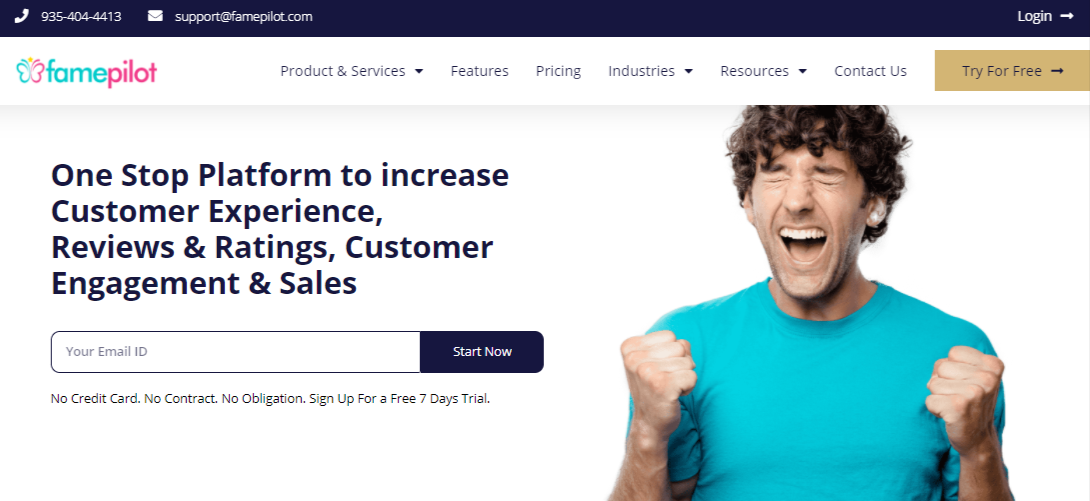
Famepilot may fit better when the buyer needs broad review-management coverage across many review sources, formal ticketing, listings management, location hierarchy, or agency/enterprise use cases. Its public pages describe multi-site monitoring, review inboxes, reply management, review generation, campaigns, competition analysis, sentiment analysis, performance reports, social sharing, white-label options, and multi-level dashboards.
That breadth can be valuable. A hotel group may care about Google, Booking.com, TripAdvisor, Agoda, and Facebook. A restaurant chain may care about Google, Zomato, Swiggy, Magicpin, and delivery platforms. A large retail or automotive group may need corporate and regional reporting. If those needs are central, Famepilot should be evaluated seriously.
The caution is not about Famepilot specifically. It applies to any broad platform. Broad capability helps only when the team has the process, time, budget, and ownership to use it. A local business that mainly wants more Google Reviews, private feedback, WhatsApp follow-ups, and simple owner-level insights may get more value from a focused workflow.
Pricing and Value for Indian SMBs
Pricing should be evaluated by total monthly value, not just the number on a pricing page. UpBlick publishes INR pricing with plan limits for locations, customers, WhatsApp review requests and reminders, team members, AI responses, analytics, competitor tracking, reporting, and agency features. That makes it easier for an Indian SMB to estimate fit before a sales call.
Famepilot’s public pages show pricing for campaign management and brand monitoring modules, while review-management pricing may need direct confirmation depending on use case, locations, and requirements. Buyers should ask for a written quote that includes locations, users, review sources, WhatsApp/SMS/email usage, support, onboarding, integrations, reporting, and any add-ons.
The cheapest tool is not always the best tool. The best value is the one your team actually uses and your owner can understand. If a ₹199 or ₹999 monthly plan solves the core review-growth workflow, that may be enough for a small business. If a larger group needs multi-source review monitoring, formal tickets, regional dashboards, and agency features, a broader platform may justify a higher cost.
Questions to Ask Before Buying
- Do we mainly need Google Review growth, or do we need monitoring across many review sites?
- Will our staff send review requests at the right time without manual reminders?
- Can unhappy customers share private feedback before posting a public complaint?
- Can WhatsApp messages be personalized, scheduled, tracked, and connected to review outcomes?
- Does AI produce review responses that sound human and brand-appropriate?
- Can the owner see review growth, rating trends, sentiment, complaints, branch performance, and competitor movement without building reports manually?
- How many locations, users, customers, and monthly messages are included?
- What support is available during setup, and can a small team adopt it quickly?
- If we are an agency, can we manage clients, permissions, reporting, and branding cleanly?
A Simple 30-Day Pilot Plan
Before committing long term, run a focused pilot. Pick one location, one customer journey, and one outcome. For a clinic, use appointment-completion review requests. For a restaurant, use dine-in feedback followed by review requests from happy customers. For a salon, send post-service WhatsApp follow-ups. For a service business, send job-completion messages. For a hotel, test post-checkout review requests and private feedback routing.
Track practical numbers: review requests sent, reviews received, response rate, private feedback count, negative feedback recovery, staff adoption, average response time, and issues repeated by customers. Also track the human side: did the receptionist understand the workflow? Did the manager know what to do next? Did the owner get useful insights? Did customers respond naturally?
This pilot reveals more than a feature checklist. It shows whether the platform becomes part of daily work or remains another login nobody opens.
Final Recommendation
UpBlick vs Famepilot is not a “good vs bad” comparison. Famepilot has credible capabilities in review monitoring, review generation, campaigns, sentiment, ticketing, multi-location use cases, and broader review-source coverage. It may be the right choice for businesses that need that breadth and have the team to use it.
UpBlick is the stronger fit for Indian SMBs that want a practical reputation-growth operating workflow centered on Google Reviews, WhatsApp follow-ups, private customer feedback, AI-assisted review responses, analytics, competitor tracking, customer management, and location-level visibility. It is especially relevant for businesses where a small team must run the process consistently: clinics, salons, gyms, restaurants, pharmacies, retail stores, hotels, service businesses, agencies, real estate firms, and local multi-location brands.
If your biggest problem is “we need a broader review-monitoring system across many public sites,” evaluate Famepilot carefully. If your biggest problem is “we need more Google Reviews, faster responses, private feedback, and a workflow our team will actually use,” start with UpBlick.
Related UpBlick Pages
Explore these UpBlick pages while comparing UpBlick vs Famepilot:
- Review generation software
- WhatsApp automation
- Customer feedback management
- AI review responses
- Analytics insights
- Customer mapping
- Multi-location management
- Book an UpBlick demo
Want to grow faster with better reviews?
Explore how automation, customer feedback workflows, and local reputation tools can help your business win more trust.
UpBlick vs Famepilot: Which Reputation Management Platform Is Better for Indian Businesses? FAQs
Grow your local reputation with confidence
Use UpBlick to monitor reviews, improve customer experience, and turn happy customers into long-term advocates.
Start your review growth journeyNo Credit Card Required • Setup in Minutes • Built for Local Businesses