Customer Feedback vs Google Reviews: What's the Difference?

Pankaj Kumar
Published on 19 Aug, 2026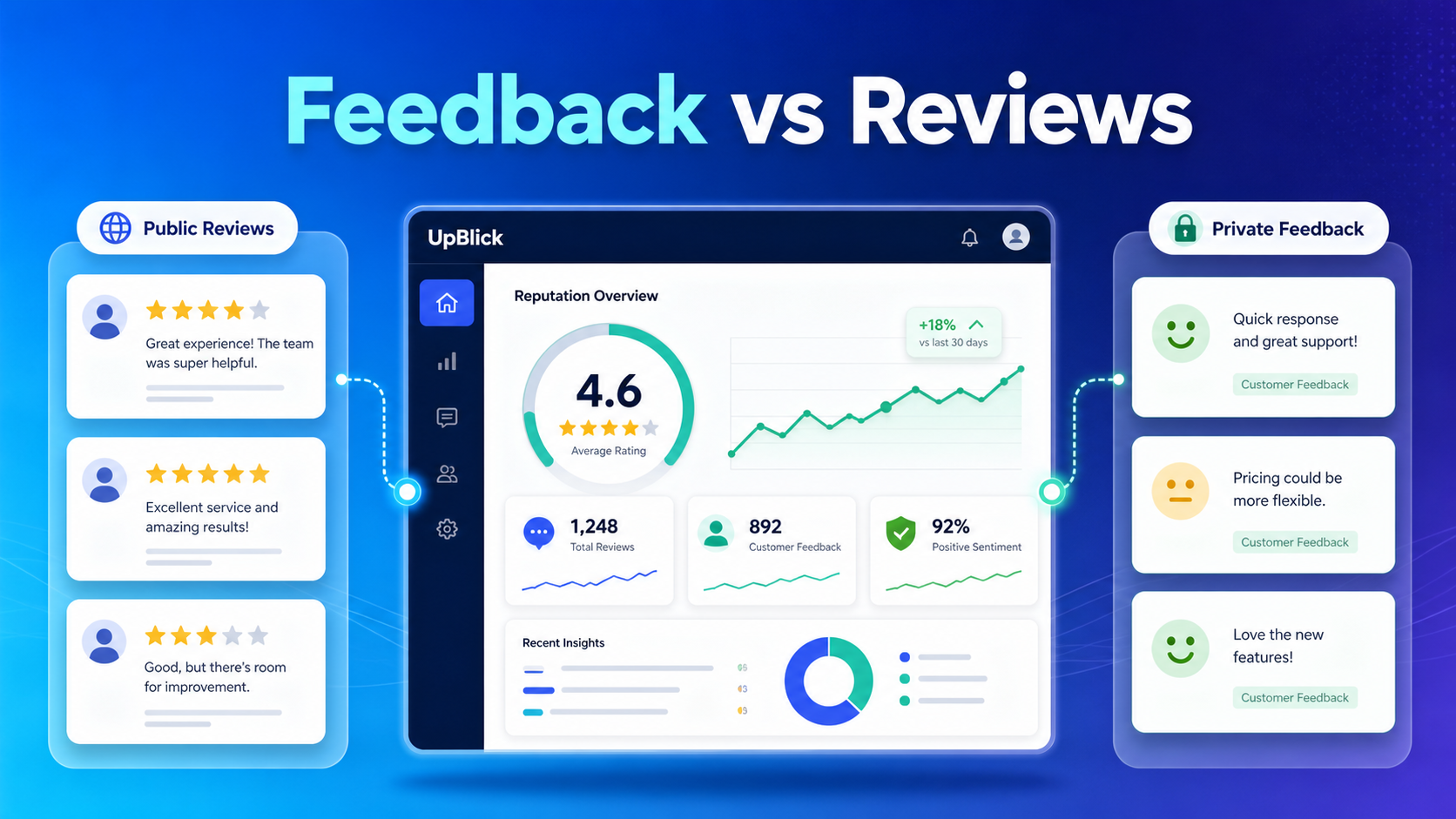
A review tells the world what a customer thinks. Feedback helps the business understand why. That difference matters because collecting public reviews is not the same as understanding customers. Businesses that learn from both can build stronger reputations and better customer experiences.
Many businesses treat customer feedback and Google reviews as if they are the same thing.
They are connected, but they serve different purposes.
A Google review helps future customers decide whether they should trust your business. Customer feedback helps your team understand what is working, what is confusing, and what needs to improve.
If you only collect reviews, you may build visibility but miss the deeper reasons customers feel the way they do. If you only collect private feedback, you may improve internally but miss the public trust that reviews create.
What Is a Google Review?
A Google review is public feedback left by a customer on your Google Business Profile.
It usually includes a star rating, written comments, photos in some cases, and the customer’s public profile name. These reviews appear where potential customers often make decisions: Google Search and Google Maps.
Google reviews influence trust, click-through rates, calls, directions, bookings, and local reputation. They also contribute to how customers compare your business against nearby competitors.
What Is Customer Feedback?
Customer feedback is any information a customer shares about their experience with your business.
It may come through surveys, WhatsApp messages, email replies, support chats, phone calls, in-store conversations, private forms, or internal feedback workflows.
Feedback may never appear publicly, but it can be more detailed than a review. It often explains the reason behind satisfaction or dissatisfaction.
Public Feedback vs Private Feedback
Public feedback shapes reputation. Private feedback shapes improvement.
A Google review is visible to everyone. It helps other customers decide whether your business deserves their attention. That makes it powerful for trust and visibility.
Private customer feedback gives your team a safer space to understand details. A customer may not want to publicly complain about a staff interaction, confusing bill, long wait, or missed follow-up, but they may share it privately if the process feels easy and respectful.
Why Happy Customers Do Not Always Leave Reviews
A happy customer is not automatically a reviewing customer.
Many satisfied customers simply move on with their day. They forget, they are busy, or they do not know where to leave the review. Some need a simple reminder and a direct review link.
This is why businesses need a consistent review request process. If you wait for happy customers to remember on their own, you will usually receive fewer reviews than your customer experience deserves.
Why Unhappy Customers May Provide Valuable Private Feedback
Not every unhappy customer wants to post publicly.
Some customers prefer to explain the issue directly if they believe the business will listen. That private feedback can be extremely valuable because it gives you a chance to fix the problem before it becomes a public review.
It may reveal problems such as unclear pricing, slow response times, staff behavior, product defects, long waits, missed updates, or gaps between what was promised and what was delivered.
What Businesses Can Learn From Each
Google reviews show how your business appears to the public.
They help you understand reputation, trust, perceived service quality, and how customers describe your business in their own words.
Customer feedback shows what is happening behind the scenes. It can explain why customers are happy, why they hesitate, why they complain, and where your process creates friction.
How Feedback Identifies Operational Problems
Feedback becomes powerful when you look for patterns.
One customer mentioning a long wait may be a single incident. Ten customers mentioning wait time is an operational signal. The same is true for confusing pricing, missed calls, delayed delivery, poor follow-up, or inconsistent staff behavior.
Reviews often show the outcome. Feedback often explains the cause.
How Feedback Improves Customer Experience
Useful feedback can improve training, communication, scheduling, billing, follow-up, product quality, and service delivery.
For example, if customers repeatedly say they were unsure about the next step, the solution may be a better follow-up message. If they mention unclear pricing, the solution may be a clearer estimate. If they mention long waits, the solution may be better appointment spacing or expectation-setting.
Feedback turns customer opinion into operational direction.
How Feedback and Reviews Work Together
Feedback and reviews should not compete with each other.
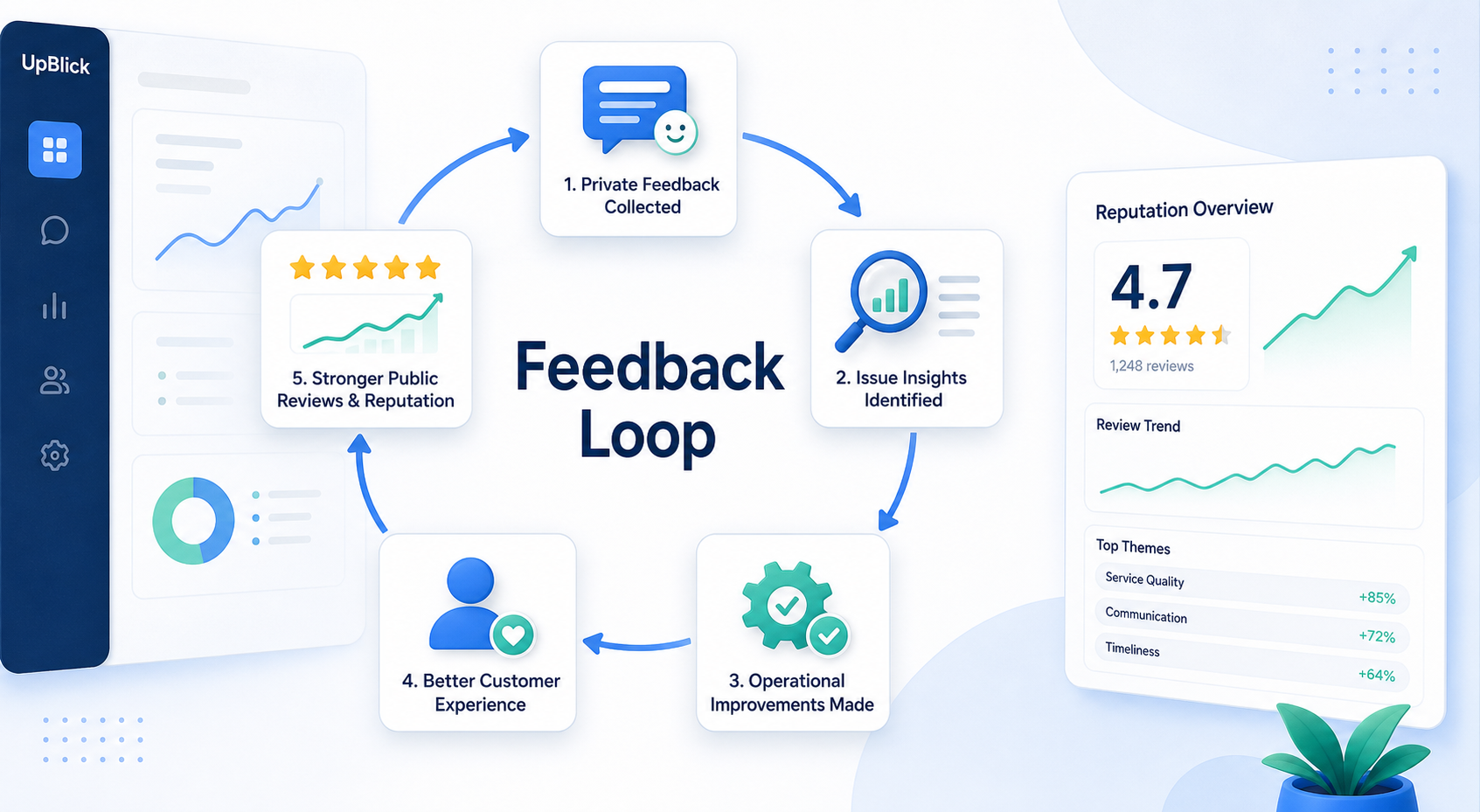
A strong customer journey can ask for private feedback first, understand the customer’s experience, resolve issues when needed, and make it easy for happy customers to share a public Google review.
This approach helps businesses improve privately while building public trust ethically.
Why Businesses Need Both
Reviews help you earn trust in public. Feedback helps you improve in private.
Without reviews, potential customers may not have enough proof to choose you. Without feedback, your team may not understand why customers feel satisfied, frustrated, loyal, or disappointed.
The strongest businesses do both: they collect public proof and listen deeply to private signals.
How UpBlick Connects Feedback With Reputation
UpBlick helps businesses connect customer feedback with online reputation management.
Teams can collect feedback, monitor Google reviews, identify recurring customer issues, respond faster, and understand which experiences are driving public reputation.
That means businesses are not just collecting reviews. They are learning from customers, improving operations, and creating more moments that deserve positive public feedback.
Final Thoughts
Customer feedback and Google reviews are connected, but they are not the same.
A review tells the world what a customer thinks. Feedback helps the business understand why.
Businesses that understand this difference can build stronger reputations, improve customer experience, and turn everyday customer opinions into long-term growth.
Explore related UpBlick pages
Continue with these UpBlick pages related to this topic:
- Customer feedback management
- Review and feedback analytics
- Customer mapping and journey tools
- AI review response feature
- Book an UpBlick demo
- Google review generation software
- Review marketing feature
- Google review guide
Want to grow faster with better reviews?
Explore how automation, customer feedback workflows, and local reputation tools can help your business win more trust.
Customer Feedback vs Google Reviews: What's the Difference? FAQs
Grow your local reputation with confidence
Use UpBlick to monitor reviews, improve customer experience, and turn happy customers into long-term advocates.
Start your review growth journeyNo Credit Card Required • Setup in Minutes • Built for Local Businesses