Customer Feedback Analysis: How to Find What Your Customers Really Think

Pankaj Kumar
Published on 20 Aug, 2026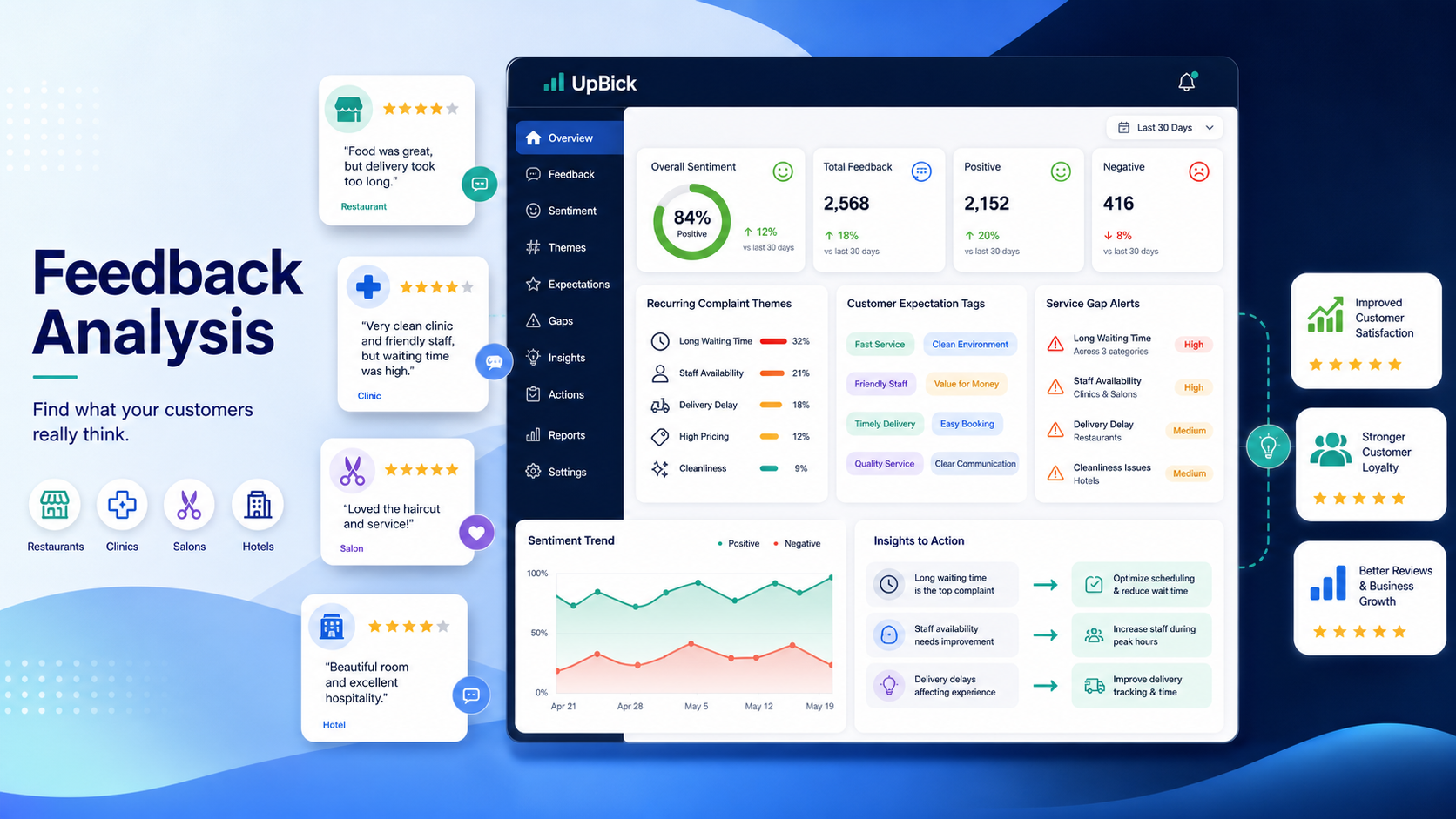
Customer feedback analysis is the difference between having customer opinions and understanding customer intelligence.
A business may collect reviews, survey answers, WhatsApp replies, support messages, complaint notes, and in-store comments every week. But if nobody organizes that information, the business only has noise. Analysis turns that noise into patterns, priorities, and decisions.
What Is Customer Feedback Analysis?
Customer feedback analysis is the process of reviewing customer comments to understand what people feel, what they expect, what they appreciate, and where the business is falling short.
It includes categorizing feedback, measuring sentiment, identifying recurring complaints, finding common expectations, spotting strengths, and turning insights into operational action.
Why Collecting Feedback Is Not Enough
Collecting feedback is only the first step. If feedback sits in spreadsheets, chat threads, review pages, or notebooks without analysis, it cannot guide improvement.
Businesses often miss clear signals because comments arrive from different places. One customer mentions slow service in a review, another says the same thing in a private message, and another tells the receptionist. Individually, each comment looks small. Together, they may reveal a serious service gap.
How to Categorize Feedback
Start by grouping feedback into useful themes. Common categories include service quality, staff behavior, wait time, pricing, cleanliness, product quality, communication, booking experience, delivery, billing, and follow-up.
Categorization helps teams move from vague opinions to specific business areas. Instead of saying “customers are unhappy,” you can say “customers are frustrated about appointment delays and unclear pricing.”
Customer Sentiment Analysis
Sentiment analysis identifies the emotional tone of feedback. Is the customer satisfied, frustrated, confused, disappointed, loyal, angry, or delighted?
A five-star review may still include a warning sign, such as “great service, but the waiting time was long.” A three-star review may include a strength, such as “the doctor was excellent, but the front desk was disorganized.” Sentiment analysis helps you understand nuance instead of only counting ratings.
Identifying Recurring Complaints
Recurring complaints are one of the most valuable parts of feedback analysis. One complaint may be an incident. Repeated complaints are a pattern.
If customers repeatedly mention delayed responses, rude staff, confusing bills, slow delivery, missed calls, poor hygiene, or inconsistent service, the business has a process problem that should be fixed before it damages reputation.
Finding Common Customer Expectations
Feedback also shows what customers expected before they became disappointed. They may expect clear pricing, faster updates, easier booking, polite communication, shorter waits, better packaging, cleaner rooms, or clearer instructions.
When you understand expectations, you can improve the experience before customers complain.
Identifying Strengths
Analysis is not only about problems. Positive feedback reveals what customers already value.
Restaurants may learn that guests love a specific dish. Clinics may discover that patients trust a particular doctor. Salons may find that customers appreciate careful consultation. Hotels may learn that cleanliness and staff warmth are their biggest reputation drivers.
Finding Service Gaps
A service gap appears when what customers expected and what they experienced do not match.
For example, a clinic may promise quick appointments but make patients wait. A hotel may show premium rooms online but deliver average maintenance. A salon may offer expert styling but fail to explain aftercare. Feedback analysis brings these gaps into view.
Turning Feedback Into Business Decisions
Good feedback analysis should lead to decisions. If complaints about wait time are increasing, adjust staffing or scheduling. If customers are confused about pricing, improve estimates and invoices. If people praise a specific service, promote it more strongly.
Feedback becomes valuable when it changes training, processes, communication, offers, operations, and customer follow-up.
Manual vs AI-Powered Feedback Analysis
Manual analysis can work when feedback volume is small. A manager can read comments, tag themes, and discuss patterns with the team. But as volume grows, manual analysis becomes slow, inconsistent, and easy to ignore.
AI-powered customer feedback analysis can organize large volumes of comments, detect sentiment, surface common themes, identify urgent issues, and help multi-location businesses compare customer experience across branches.
Examples Across Local Businesses
A restaurant can identify that food quality is strong but delivery packaging causes complaints. A clinic can find that patients trust doctors but dislike appointment delays. A salon can learn that styling is praised but price explanation is weak. A hotel can discover that guests love staff behavior but complain about room maintenance.
These insights are practical because they tell the business exactly where to act.
How UpBlick Helps Businesses Analyze Feedback
UpBlick helps businesses collect feedback, monitor reviews, organize customer comments, identify recurring issues, understand sentiment, and convert customer insights into action.
Instead of treating feedback as scattered messages, UpBlick helps teams see what customers really think, what needs attention, and which improvements can strengthen both customer experience and public reputation.
Explore related UpBlick pages
Continue with these UpBlick pages related to this topic:
- Customer feedback management
- Review and feedback analytics
- Customer mapping and journey tools
- AI review response feature
- Book an UpBlick demo
- Review management for restaurants
- Review management for clinics
- Review management for salons
- Review management for hotels
Want to grow faster with better reviews?
Explore how automation, customer feedback workflows, and local reputation tools can help your business win more trust.
Customer Feedback Analysis: How to Find What Your Customers Really Think FAQs
Grow your local reputation with confidence
Use UpBlick to monitor reviews, improve customer experience, and turn happy customers into long-term advocates.
Start your review growth journeyNo Credit Card Required • Setup in Minutes • Built for Local Businesses