How to Get More Google Reviews for Your Business (Without Annoying Customers)

Karthik Subramanian
Published on 24 Jun, 2026Google reviews influence customer trust, local SEO rankings, and buying decisions more than ever before. Yet many business owners struggle to collect reviews consistently because customers forget, the process feels complicated, or nobody asks at the right time. Fortunately, generating more Google reviews doesn't require aggressive marketing. Small improvements in timing, convenience, and follow-up can dramatically increase review volume and strengthen your online reputation.
For many local businesses, getting customers is difficult enough. But an even bigger challenge often comes after the sale—encouraging satisfied customers to actually share their experience online.
Whether you run a clinic, salon, restaurant, gym, or retail store, Google reviews have become one of the most important factors influencing customer trust and local search visibility. Yet countless business owners say the same thing:
"Our customers are happy, but nobody leaves reviews."
The reality is that most customers are willing to leave feedback. They simply forget, don't know where to go, or are never asked at the right moment. The good news is that collecting more Google reviews doesn't require expensive marketing campaigns or complicated systems.
In this guide, we'll explore practical and proven ways to increase Google reviews without annoying customers or violating Google's policies.
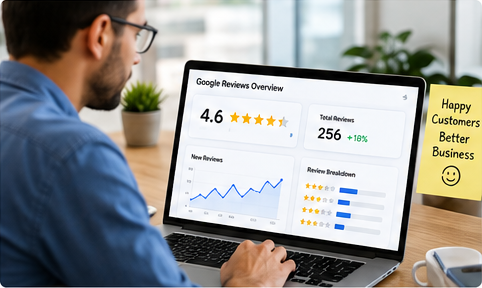
Why Google Reviews Matter More Than Ever
Before discussing how to generate reviews, it's important to understand why they matter so much.
Google reviews influence three major areas of business growth:
- Customer trust and credibility.
- Google Maps and local SEO rankings.
- Conversion rates and purchase decisions.
Most consumers compare businesses before making a decision. When two companies offer similar products or services, customers naturally choose the one with stronger ratings and more recent reviews.
Reviews act as digital word-of-mouth recommendations. They provide social proof and reassure potential customers that other people have already had positive experiences with your business.
Why Customers Don't Leave Reviews
Many business owners assume customers refuse to write reviews. In reality, that is rarely the problem.
Most satisfied customers simply move on with their day. They may intend to leave a review later but eventually forget.
Common reasons customers don't leave reviews include:
- They forgot after leaving your business.
- They don't know where to leave a review.
- The process feels too complicated.
- Nobody ever asked them.
- Too much time passed after the experience.
Understanding these barriers is important because solving them usually leads to more reviews without changing your service quality.
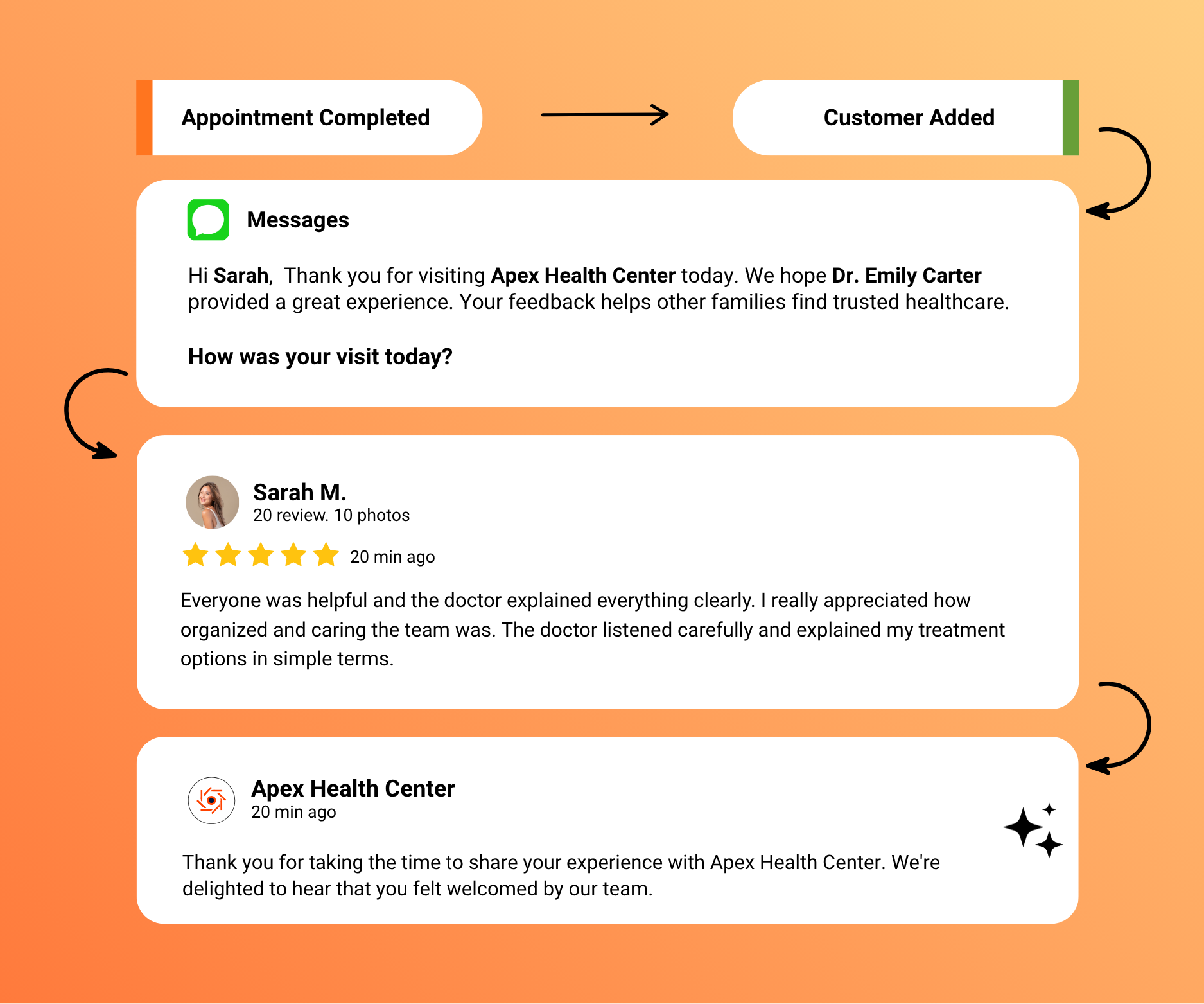
Ask at the Right Time
Timing is one of the biggest factors affecting review conversion.
Customers are most likely to leave feedback immediately after a positive experience. Waiting several days often reduces response rates because the emotional connection weakens over time.
Ideal moments include:
- After a successful appointment.
- Immediately after payment.
- Following product delivery.
- After completing a service.
- After receiving positive verbal feedback.
Businesses that ask at the moment of customer satisfaction consistently receive more reviews than those relying on memory.
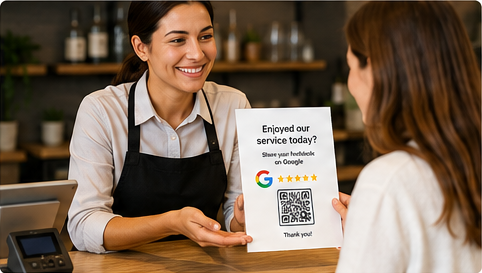
Make Leaving a Review Easy
Even motivated customers may abandon the process if they have to search for your business manually.
Reduce friction by providing:
- Direct Google review links.
- QR codes at your location.
- SMS review requests.
- Email follow-ups.
- Review links on invoices and receipts.
The fewer steps customers must complete, the more likely they are to leave feedback.
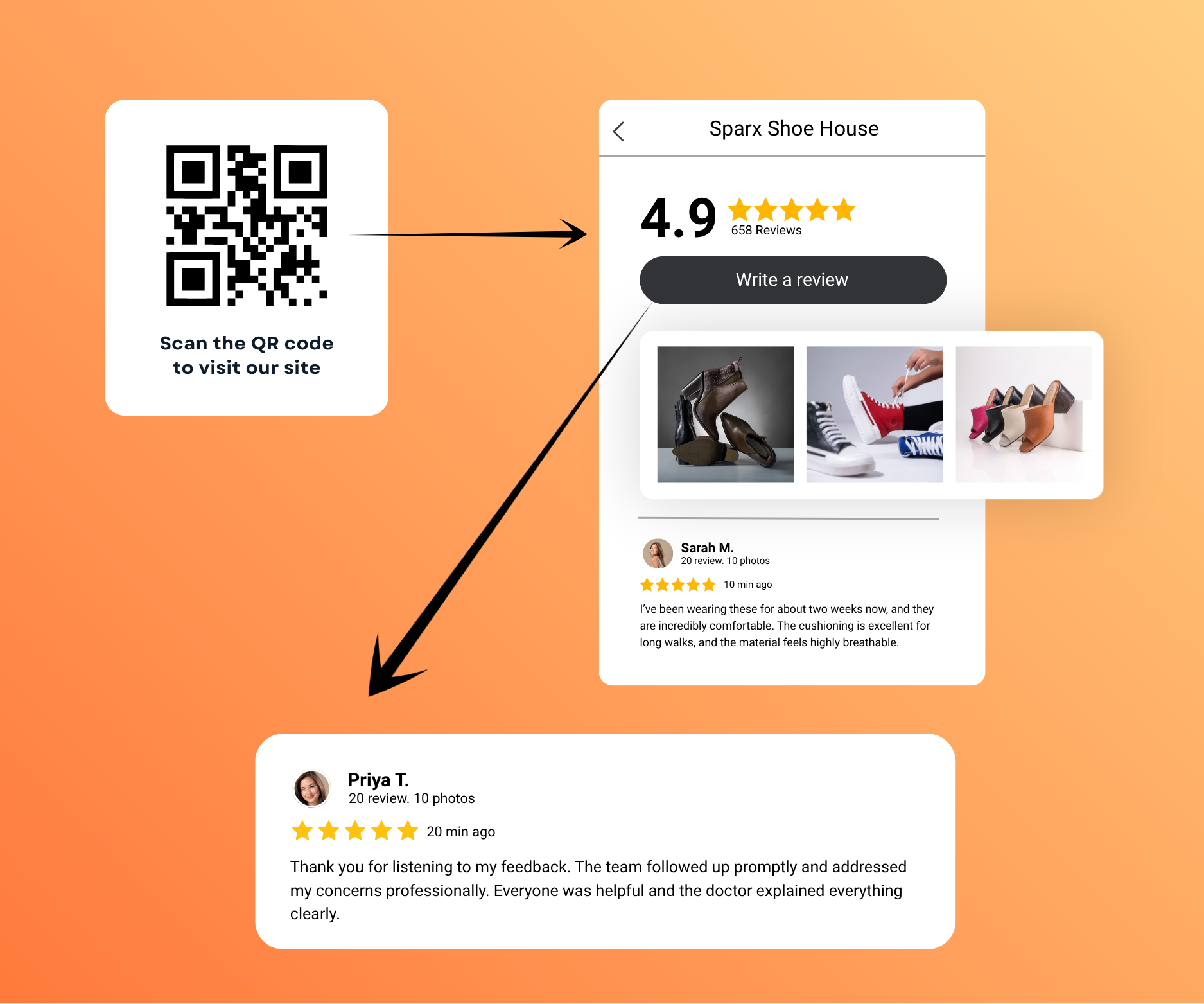
Follow Up Politely
Sometimes customers simply need a reminder.
A single follow-up message several days later can significantly improve review conversion rates. However, businesses should avoid sending repeated reminders that may feel intrusive.
The goal is to encourage honest feedback—not pressure customers.
Never Buy Google Reviews
Buying fake reviews might seem like a shortcut, but it creates long-term risks.
Google actively removes suspicious reviews, and customers can often recognize inauthentic feedback.
Genuine reviews create trust. Fake reviews destroy it.
Automate Review Collection
The most successful businesses don't depend on memory. They build repeatable systems.
Review automation helps ensure every satisfied customer receives an opportunity to provide feedback.
Tools like UpBlick can automate review requests through SMS, email, QR codes, and follow-up reminders, making reputation management much easier for growing local businesses.
Final Thoughts
Getting more Google reviews isn't about pushing customers. It's about creating the right process.
Businesses that consistently ask, simplify the experience, and follow up politely gradually build stronger online reputations.
Over time, those reviews become one of the most powerful assets driving trust, visibility, and business growth.
Explore related UpBlick pages
Continue with these UpBlick pages related to this topic:
- Google review generation software
- WhatsApp review automation
- Google review guide
- Review marketing guide
- Book an UpBlick demo
Want to grow faster with better reviews?
Explore how automation, customer feedback workflows, and local reputation tools can help your business win more trust.
How to Get More Google Reviews for Your Business (Without Annoying Customers) FAQs
Grow your local reputation with confidence
Use UpBlick to monitor reviews, improve customer experience, and turn happy customers into long-term advocates.
Start your review growth journeyNo Credit Card Required • Setup in Minutes • Built for Local Businesses